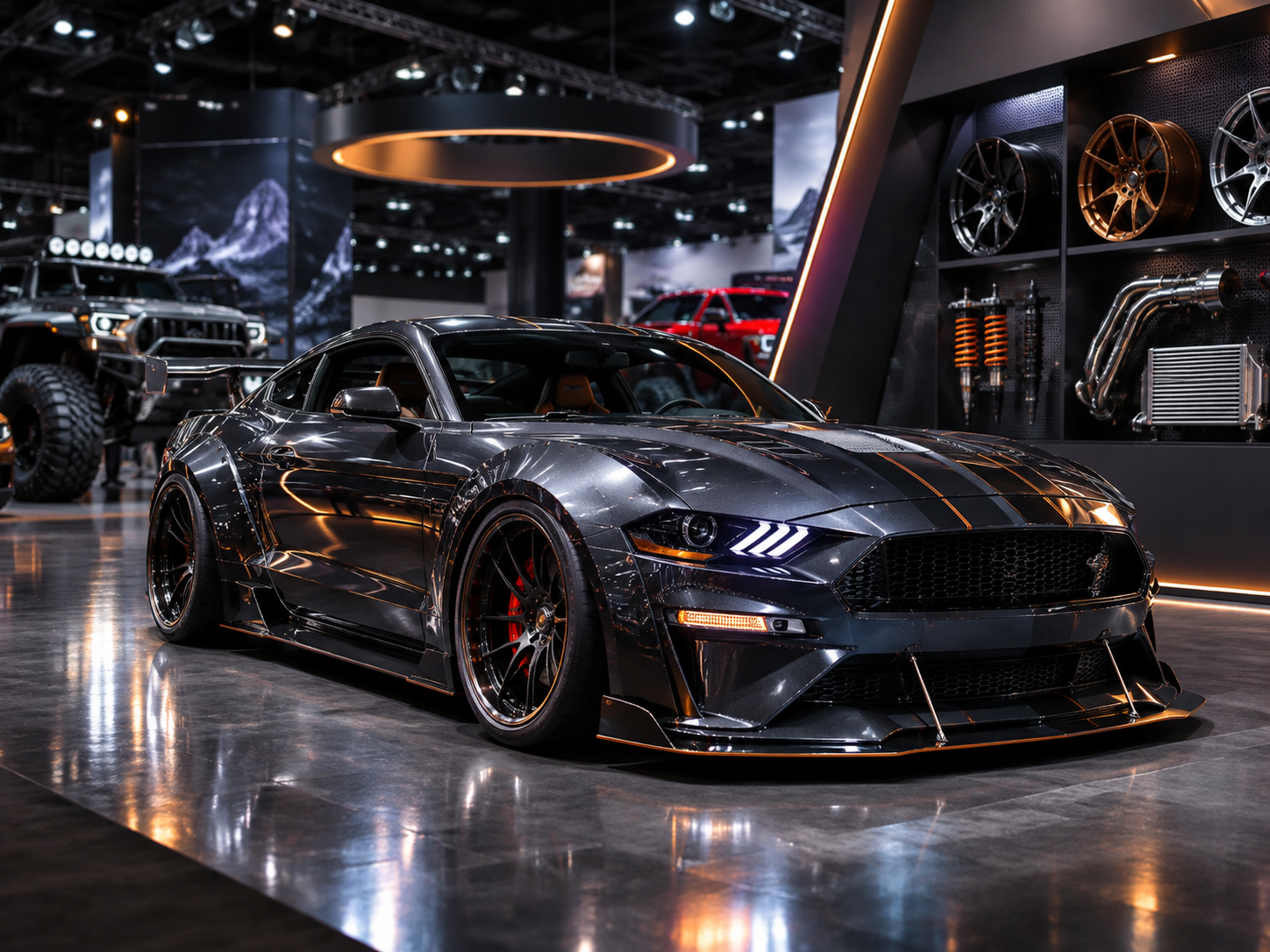
SEMA 2026 made the shift impossible to miss
SEMA has always been where the automotive aftermarket goes to see what is next. In 2026, the bigger story was not a single product, vehicle, or trend. It was the pace at which technology, vehicle complexity, customer expectations, and business operations are converging. More than 150,000 attendees and over 2,200 exhibiting brands came to Las Vegas, including hundreds of first-time exhibitors. That scale matters because it shows an aftermarket that is not retreating. It is evolving, broadening, and becoming more sophisticated.
For shop owners, installers, manufacturers, and marketers, the opportunity sits in the translation. The value of SEMA does not come from collecting product brochures or photographing the newest builds. It comes from deciding which changes will affect the way customers buy, the way technicians work, and the way a business has to operate over the next several years. The strongest takeaway from 2026 was clear: the shops that combine technical capability with disciplined business systems will be better positioned than shops that rely on craftsmanship alone.
Technology is moving from the vehicle into the shop
Artificial intelligence showed up at SEMA as a practical operating tool, not just a marketing headline. SEMA highlighted AI-enabled repair tools, connected technology, advanced manufacturing, and new ways to streamline shop procedures. Education sessions pushed the same message from a business perspective: use technology to remove friction, organize information, and improve the customer experience. That creates a meaningful distinction. AI does not replace the installer, estimator, service advisor, or owner. It should make each of those roles more effective.
For restylers, that can mean faster estimating, cleaner customer follow-up, better documentation, more consistent training, stronger lead qualification, and smarter use of customer data. The shops that treat AI as another operational system will gain more from it than the shops chasing novelty. The question is no longer whether AI will influence automotive businesses. It already does. The better question is where it can reduce repetitive work without weakening the human relationship that ultimately earns trust and closes the sale.
ADAS is becoming a business requirement, not a technical footnote
The expanded ADAS Showcase was one of the most important signals at SEMA 2026. Vehicle engineers, calibration specialists, equipment manufacturers, and repair professionals demonstrated how repairs and vehicle changes can affect advanced driver-assistance systems. Sensor alignment, calibration requirements, troubleshooting, and controlled procedures are no longer concerns reserved for collision centers. As vehicles add more cameras, radar, sensors, and software-dependent safety systems, every aftermarket business has to understand where its work intersects with those systems.
That matters even for shops focused on PPF, tint, wraps, accessories, and appearance upgrades. A modern vehicle is an integrated platform. Work performed around windshields, bumpers, mirrors, fascias, suspension, wheels, lighting, or sensor-equipped surfaces can create questions that did not exist a decade ago. Shops do not need to become full calibration centers overnight, but they do need clear procedures: know when ADAS may be affected, know what the manufacturer requires, document the work, and build relationships with qualified calibration resources when the job moves beyond the shop's capabilities.
Restyling demand remains strong - but the sale is getting broader
SEMA continues to show that appearance and personalization remain major economic drivers. The association estimates repair and refinishing-related aftermarket spending at roughly $9 billion annually, with exterior restyling alone exceeding $6 billion in consumer spending. Wraps, tint, paint and refinishing materials, lighting, body upgrades, appearance accessories, and vehicle-protection products remain important parts of that market. The demand is there, but consumers increasingly expect the buying experience to match the quality of the finished vehicle.
That raises the standard for how shops position themselves. Customers want to understand the product, the installer, the process, the warranty, the expected outcome, and the value before they commit. At SEMA, one customer-experience session reduced that challenge to three practical ideas: clarity, certainty, and consistency. Those principles apply directly to the restyling business. Make the offer easy to understand. Set expectations before the installation. Deliver the same level of professionalism from the first search or phone call through pickup and post-install follow-up. Premium work deserves a premium sales process.
The real takeaway: better systems will separate the winners
SEMA 2026 also put operational discipline at the center of growth. Sessions on scaling automotive businesses emphasized repeatable systems, documented procedures, delegation, hiring discipline, and internal controls. That may sound less exciting than a new product launch, but it is one of the most important lessons from the show. A shop cannot scale on owner memory, technician heroics, or informal processes. Growth magnifies whatever already exists. Strong systems become leverage. Weak systems become bottlenecks.
For automotive specialty businesses heading into 2027, the playbook is becoming clearer. Stay close to the technology changing the vehicle. Build the technical partnerships required to work safely around ADAS and increasingly complex platforms. Use AI where it makes the operation faster and more consistent. Keep investing in restyling categories where customers continue to spend. Then support all of it with clear positioning, disciplined follow-up, documented workflows, and an experience that makes the customer confident in the shop. SEMA 2026 showed an industry full of opportunity. The businesses that convert that opportunity into repeatable execution will be the ones that turn momentum into growth.